Transit Pulse Jakarta
How Jakarta moves, one bus trip at a time
Built from Transjakarta's official GTFS schedule: 67,579 scheduled trips across 247 active corridors on a typical Monday.
What happened at CSW
When the queue reached the ground floor
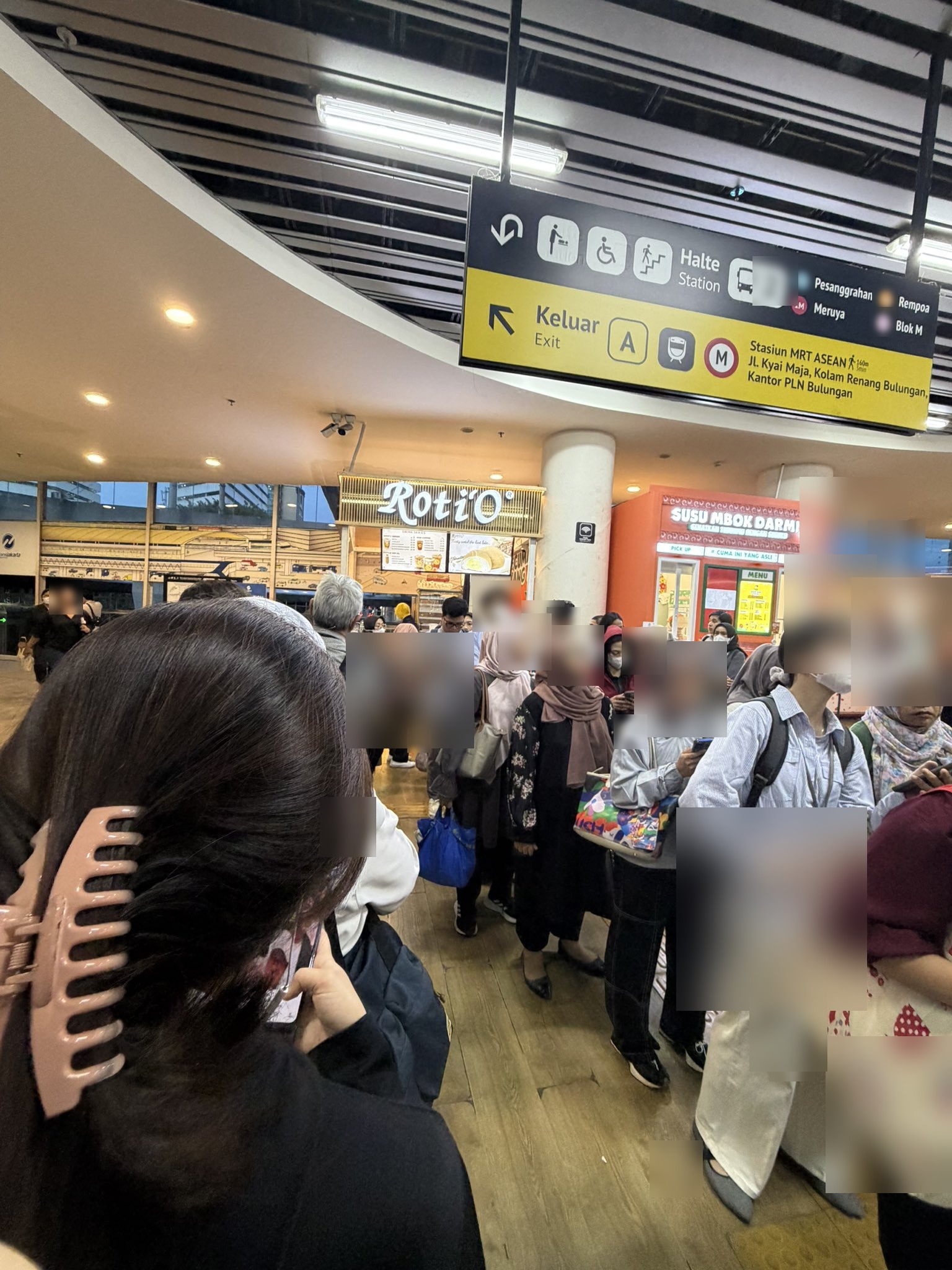
Passenger queues at CSW Sky Corridor recently backed up from the upper platform levels down to street level. The Level 5 platform reached its maximum occupancy, forcing passenger flow to be held temporarily.
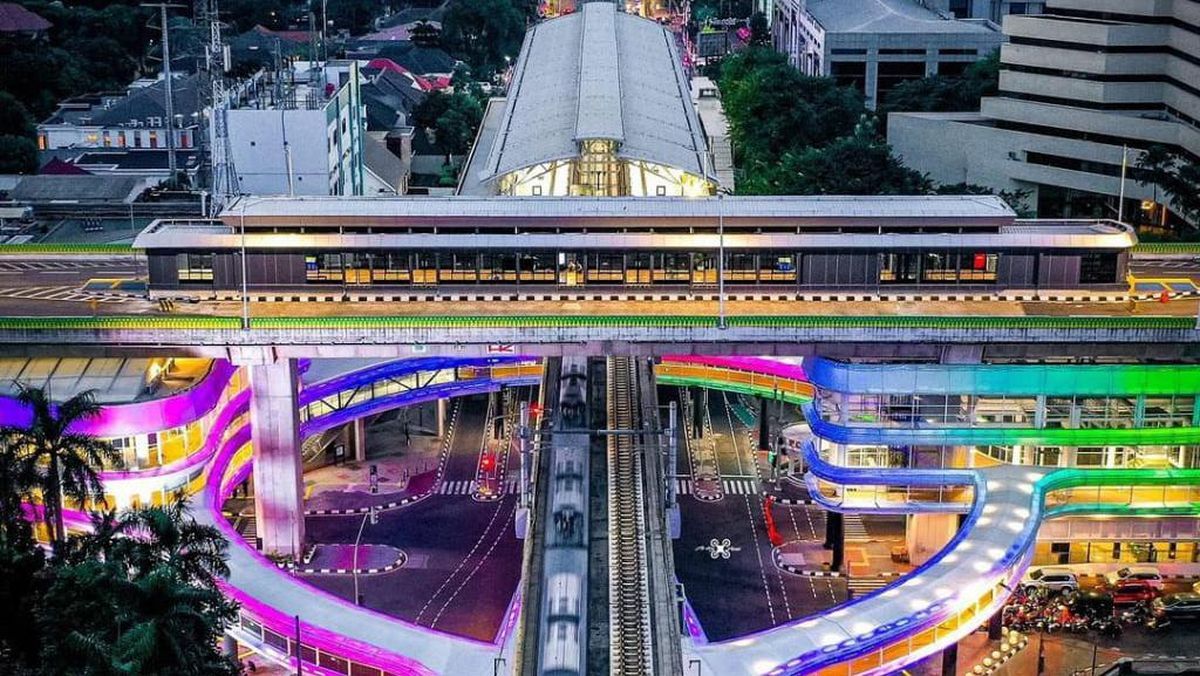
CSW is not a single-corridor stop. It is a four-halte interchange complex (CSW 1, CSW 2, ASEAN, and Kejaksaan Agung) connected to MRT Jakarta's ASEAN station. At least a dozen distinct Transjakarta services converge there: the elevated "Koridor Langit" family (13, 13B, and the L13E express), trunk Corridor 1, and multiple feeder routes.
4
BRT halte in one complex
1
MRT station connected
2021
Interchange opened
12+
Routes converge here
Where the name comes from
CSW stands for Centrale Stichting Wederopbouw, Dutch for "Central Foundation for Reconstruction." It's the old name of the intersection in Kebayoran Baru, South Jakarta, that the interchange is built over.
This site focuses on one piece of that picture: the schedule side of the Corridor 13 family, since that's what Transjakarta's published GTFS data can actually speak to. It is not a claim that service frequency is the whole explanation. Platform design, vertical circulation, and multiple corridors' peak periods overlapping at the same transfer point are all plausible contributing factors this data alone can't settle. What follows is the frequency evidence, presented as one lens on a more complicated interchange, not the full story.
0
Daily trips on Koridor Langit (Corridor 13 family)
Corridor 13, its 13B branch, and the L13E express all share the same elevated busway into CSW. One scheduled bus movement from terminal to terminal counts as one trip.
Corridor L13E
836
Corridor 13
495
Corridor 13B
255
Corridor ranking
How the Corridor 13 family stacks up
Plus 232 more corridors running 53,185 combined daily trips.
Split apart, none of Corridor 13's branches would crack the top 10. The best of them ranks around #9. Counted the way they actually operate, sharing one elevated busway into CSW, they're Jakarta's busiest corridor. That gap is the whole reason this page exists.
Relative comparison
Corridor 13 family, side by side
107%
Corridor 13 Family runs at 107% of Corridor 9's daily trips
1,586 vs 1,488 trips/day
119%
Corridor 13 Family runs at 119% of Corridor 1's daily trips
1,586 vs 1,338 trips/day
138%
Corridor 13 Family runs at 138% of Corridor 10's daily trips
1,586 vs 1,149 trips/day
Explore the network
Every corridor, mapped and timed
Pick a corridor on either side to see where it runs and when its buses actually show up. Both stay in sync.
Showing: All corridors
Weekday peak (Monday)
05:00
Weekend peak (Saturday)
05:00
Weekday trips (Monday)
67,579
Weekend trips (Saturday)
65,706
Key takeaways
What the schedule tells us
Corridor 13 accounts for the largest volume of scheduled trips in the network, with 1,586 departures per day. Since its branches converge at CSW, the station sees one of the highest concentrations of scheduled bus movements in Jakarta.
The network is highly concentrated. Just three of 247 active corridors account for 7% of all scheduled trips, highlighting how a relatively small number of corridors provide a disproportionate share of scheduled service.
Across the network, scheduled departures peak at 05:00, when many routes dispatch their first buses simultaneously. This reflects service initialization rather than peak passenger demand.
Weekday and Saturday schedules differ by only about 3%, suggesting that Transjakarta maintains relatively consistent service levels throughout the week. Passenger demand, however, cannot be inferred from schedules alone.